Sunday, May 23, 2010

Spot Light

Emits light from a source location to a target based on the shape of a cone

Outer Cone: define when the light starts to fall off
Inner Cone: determines the hot spot of the light

Spot lights are good for emulating 仿效 sources of light such as floodlights and track lighting

Saturday, May 22, 2010

Point Light

Emits light in all directions from its specified location

Point lights are good for emulating sources of light such as light bulbs, lanterns, and candles

Lighting

Lighting is used to set a specific mood in a scene or draw attention to a specific area or detail
Day: warm and bright

Night: warm and inviting
Lighting in a scene must be done with the right balance of lights and shadows

It is best to start with a few lights and adjust their properties to produce the desired look before adding more lights
Lights cast shadows, so to add too many can confuse someone when they are looking at a rendered scene

When default lighting is enabled, there are two distant light sources available for your scenes that emit light onto all visible faces
Default light does not cast shadows, so usually not used when rendering a scene with materials

Export Visual Style

The easiest way to make the style available in another drawing is to export it to a tool palette

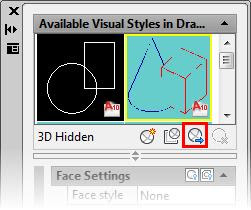
Export Visual Style by Visual Style Manager
Highlight the desired visual style and click the Export the Selected Visual Style to the Tool Palette button

Drag Export to Tool Palette
The selected visual style has been dragged to the active tool palette

The exported Visual Style becomes completely independent

Friday, May 21, 2010

Visual Style Override

Create temporary visual style overrides:
  1. Changing a visual style's properties on the Render tab
  2. Visual Styles and Edge Effects panels
Visual Style Panel
1. Visual Style Manager
2. Visual Style
3. X-Ray Effect
4. Opacity
5. Face Color Mode
6. Face Style
7. Lighting Quality
8. Performance Tuner

Edge Effects Panel
1. Edges
2. Edge Overhang toggle / Edge Overhang slider
3. Edge Jitter toggle / Edge Jitter slider
4. Silhouette Edge toggle / Silhouette Edge Width slider
5. Obscured Edges toggle / Obscured Edges Color pull-down
6. Intersection Edges toggle / Edge Intersection Color pull-down
7. Edge Color

Temporary overrides made here are not saved automatically

Monday, February 1, 2010

Visual Styles Manager

Render tab > Visual Styles panel > Visual Styles

Edit an existing style or create new styles to fit the design needs

  1. 2D Wireframe: Displays 3D models as wireframe with no shading
  2. 3D Hidden: Displays 3D models as wireframe with hidden lines removed
  3. 3D Wireframe: Displays objects as wireframe
  4. Conceptual: Displays 3D Models in a shaded format with transitioning colors
  5. Realistic: Displays 3D models as shaded with the edges between polygon faces smoothed. Display Materials

Visual Styles

Create, apply, and manage visual styles and edge effects to control the appearance of the 3D model

A visual style controls the model's edges, shading, background, shadows, faces, and more

Visual styles enable the designer to quickly change the appearance of a model